Research as Art:
A Dream of Metabonomics
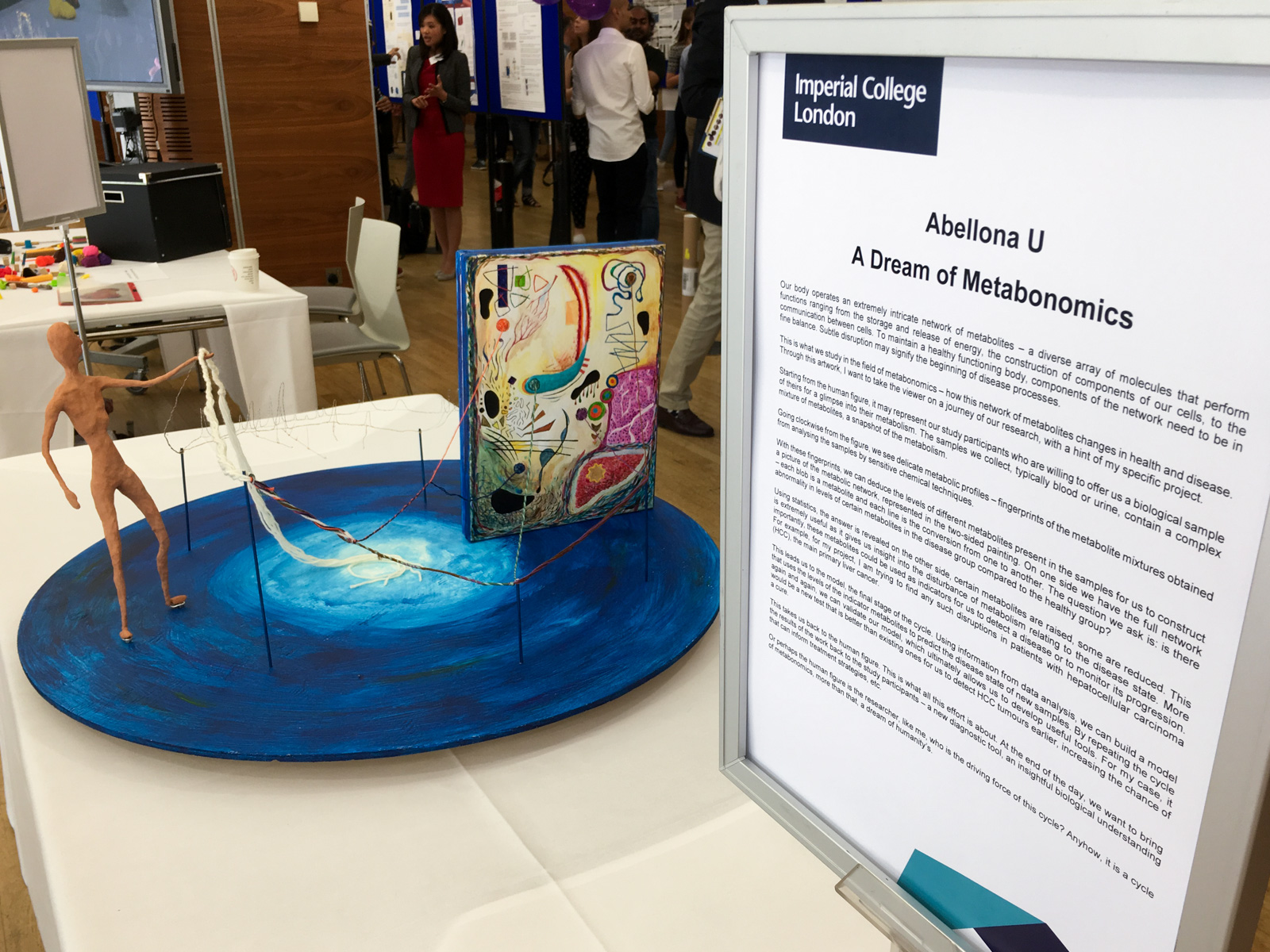
Artwork made as part of Summer Showcase 2018 organised by Graduate School, Imperial College London
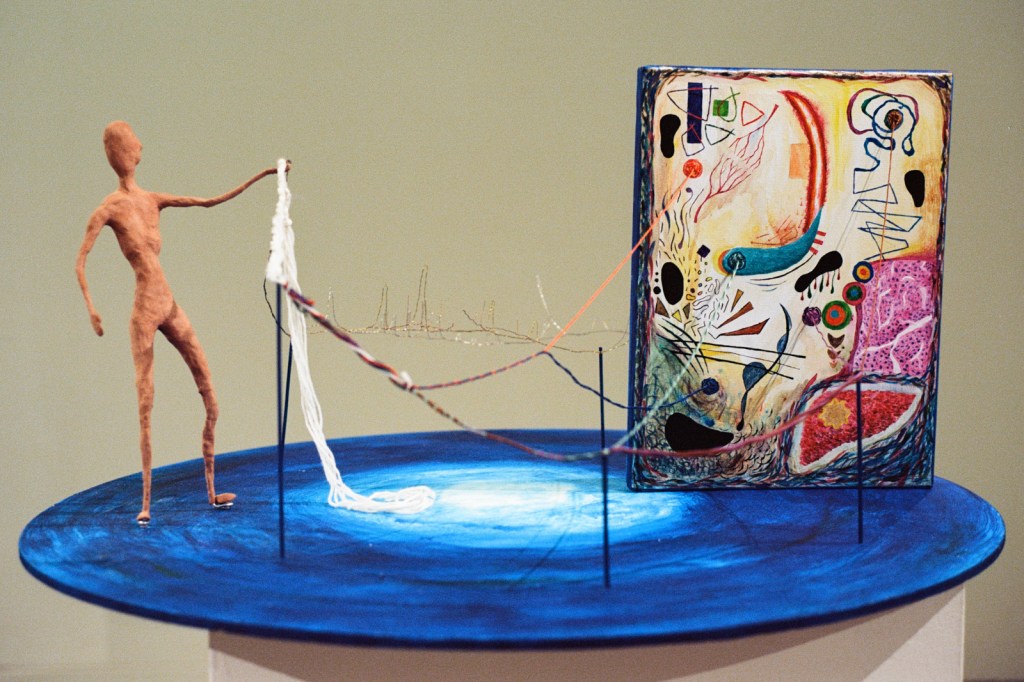
Our body operates an extremely intricate network of metabolites – a diverse array of molecules that perform functions ranging from the storage and release of energy, the construction of components of our cells, to the communication between cells. To maintain a healthy functioning body, components of the network need to be in fine balance. Subtle disruption may signify the beginning of disease processes.
This is what we study in the field of metabonomics – how this network of metabolites changes in health and disease. Through this artwork, I want to take the viewer on a journey of our research, with a hint of my specific project.
Starting from the human figure, it may represent our study participants who are willing to offer us a biological sample of theirs for a glimpse into their metabolism. The samples we collect, typically blood or urine, contain a complex mixture of metabolites which provides a snapshot of the metabolism.
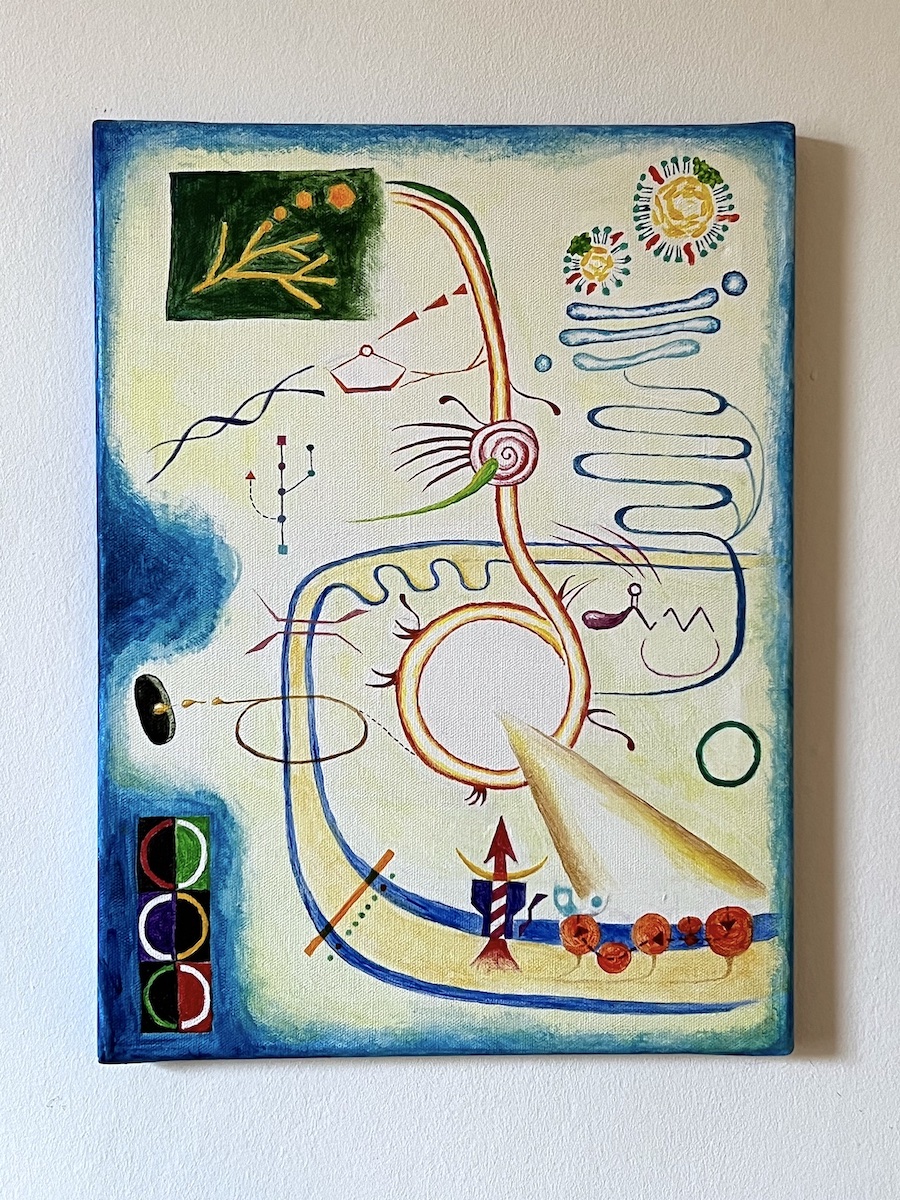
Going clockwise from the figure, we see delicate metabolic profiles – fingerprints of the metabolite mixtures obtained from analysing the samples by sensitive chemical techniques.
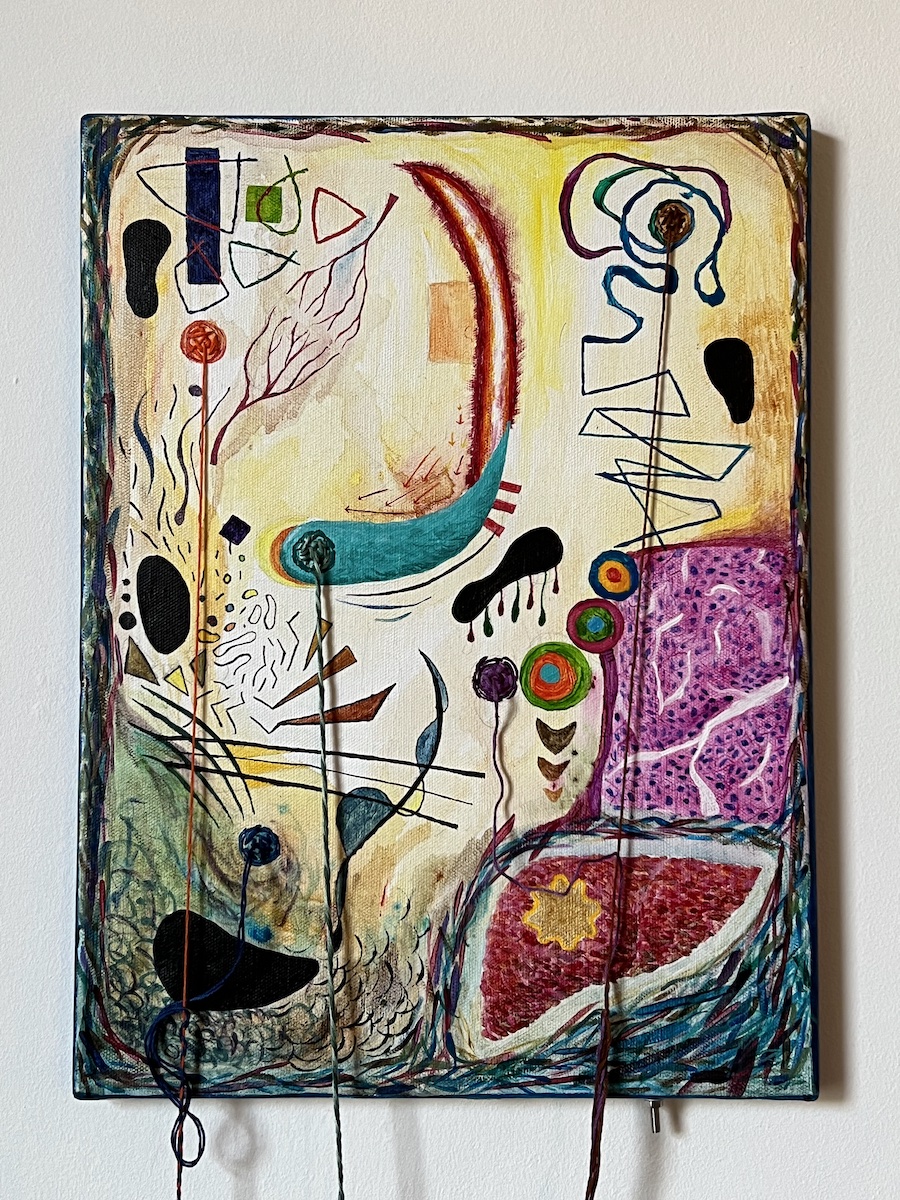
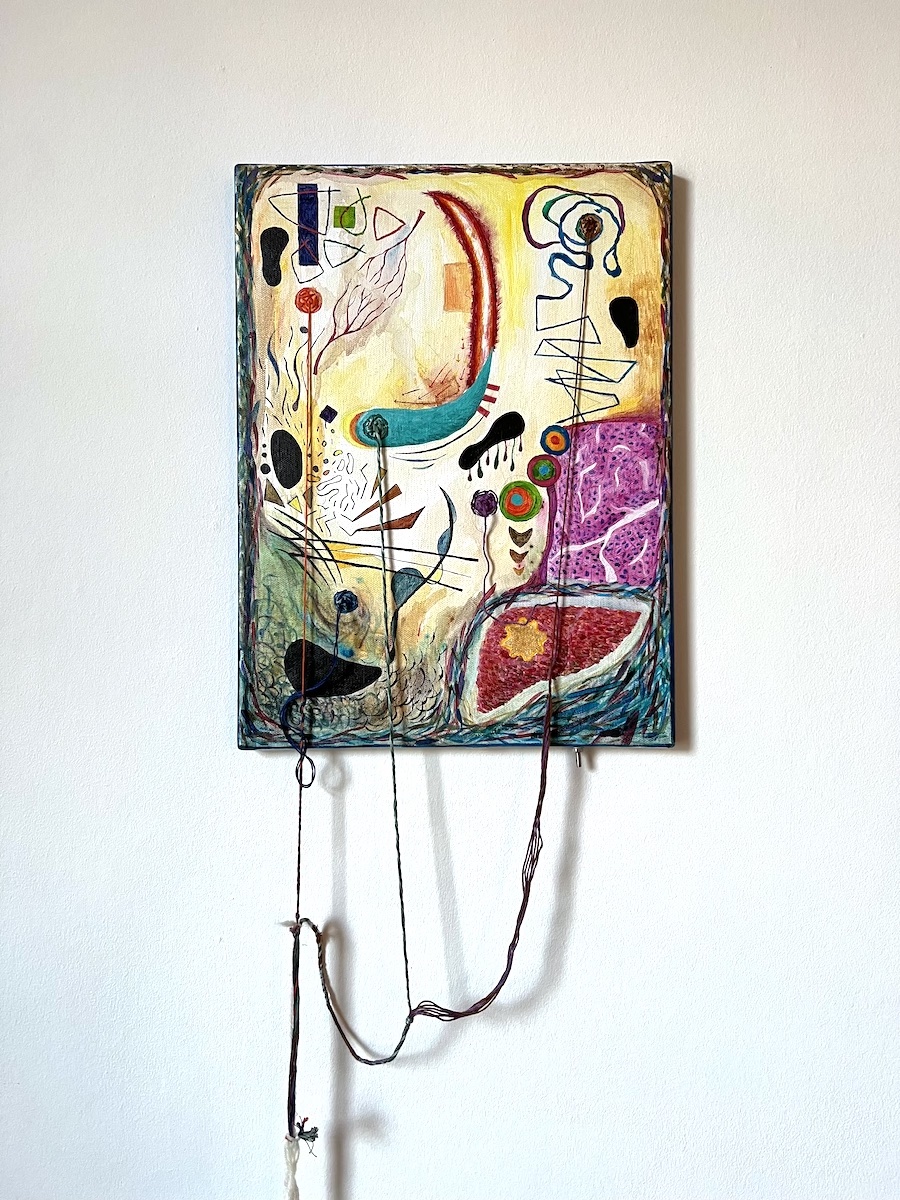
With these fingerprints, we can deduce the levels of different metabolites present in the samples for us to construct a picture of the metabolic network, represented in the two-sided painting. On one side we have the full network – each blob is a metabolite and each line is the conversion from one to another. The question we ask is: is there any abnormality in the levels of certain metabolites in the disease group compared to the healthy group?
Using statistics, the answer is revealed on the other side, certain metabolites are raised, some are reduced. This is extremely useful as it gives us insight into the disturbance of metabolism relating to the disease state. More importantly, these metabolites could be used as indicators for us to detect a disease or to monitor its progression. For example, for my project, I am trying to find any such disruptions in patients with hepatocellular carcinoma (HCC), the cancer of liver cells.
This leads us to the model, the final stage of the cycle. Using findings from the data analysis, we can build a model that uses the levels of the indicator metabolites to predict the disease state of new samples. By repeating the cycle again and again, we can validate our model, which ultimately allows us to develop useful tools. For my case, it would be a new test that is better than existing ones for us to detect HCC tumours earlier, hence increasing the chance of a cure.
This takes us back to the human figure. This is what all this effort is about. At the end of the day, we want to bring the results of our work back to the study participants – a new diagnostic tool, an insightful biological understanding that can inform treatment strategies, etc.
Or perhaps the human figure is the researcher, like me, who is the driving force of this cycle? Anyhow, it is a cycle of metabonomics, more than that, a dream of humanity’s.
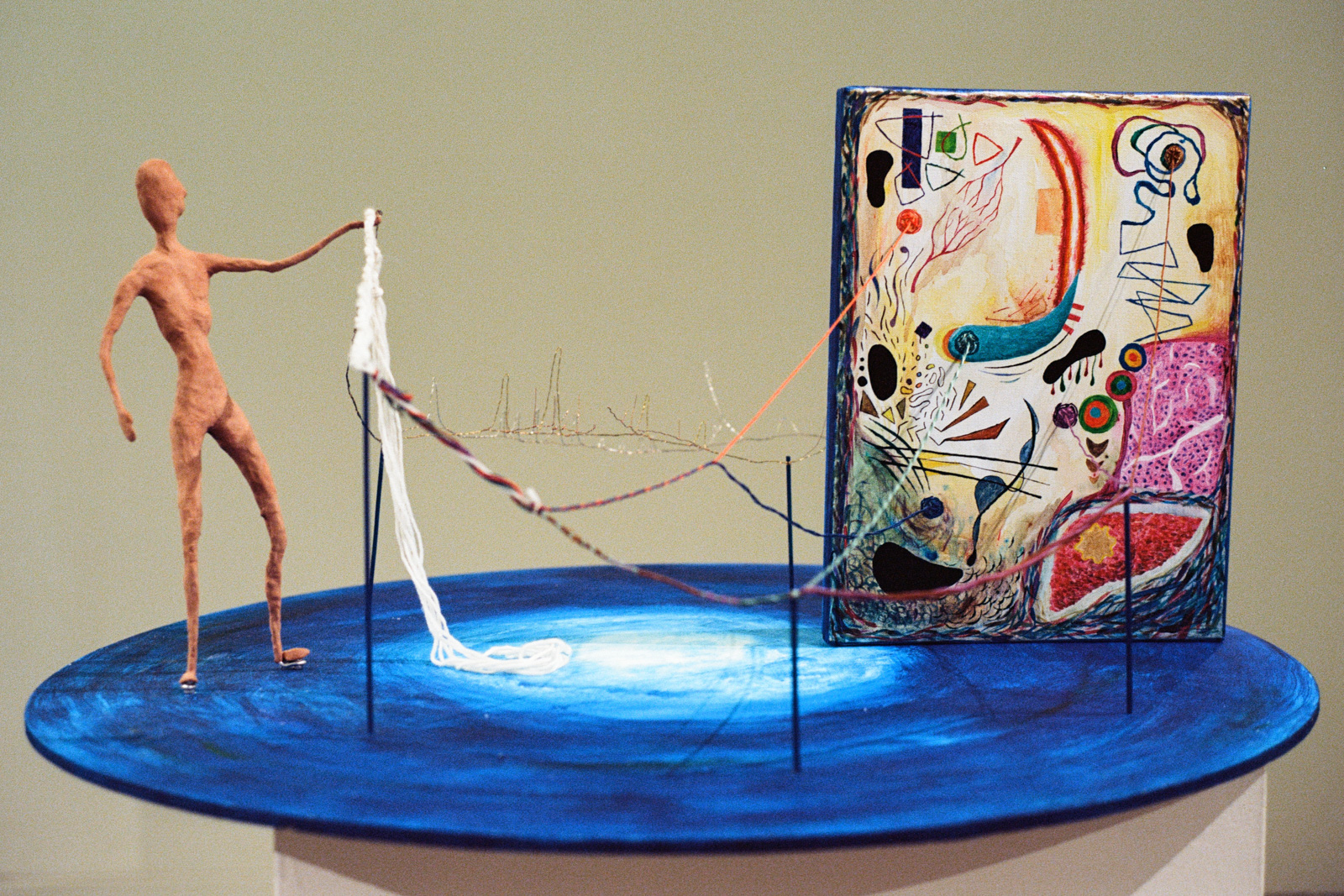


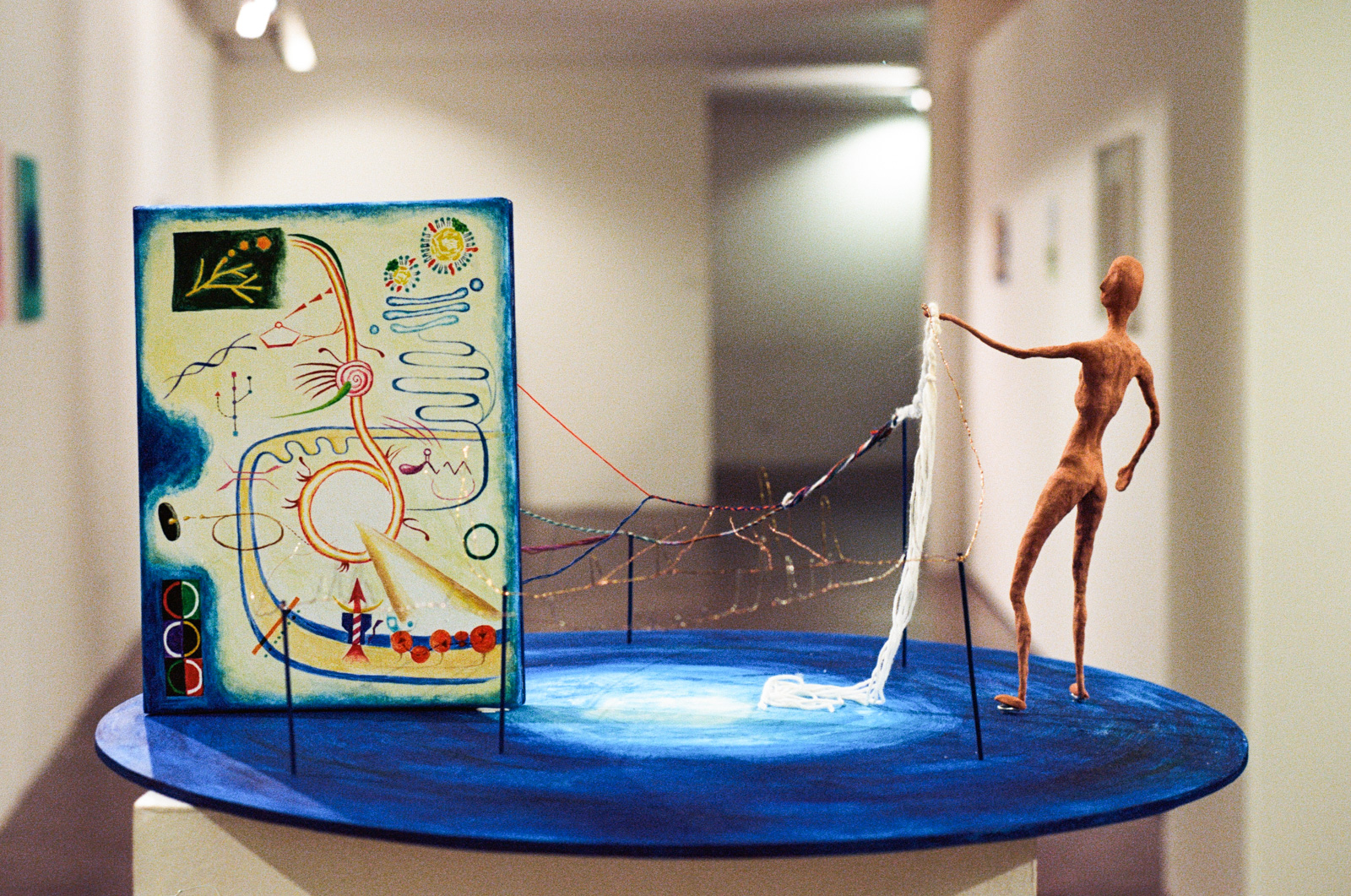

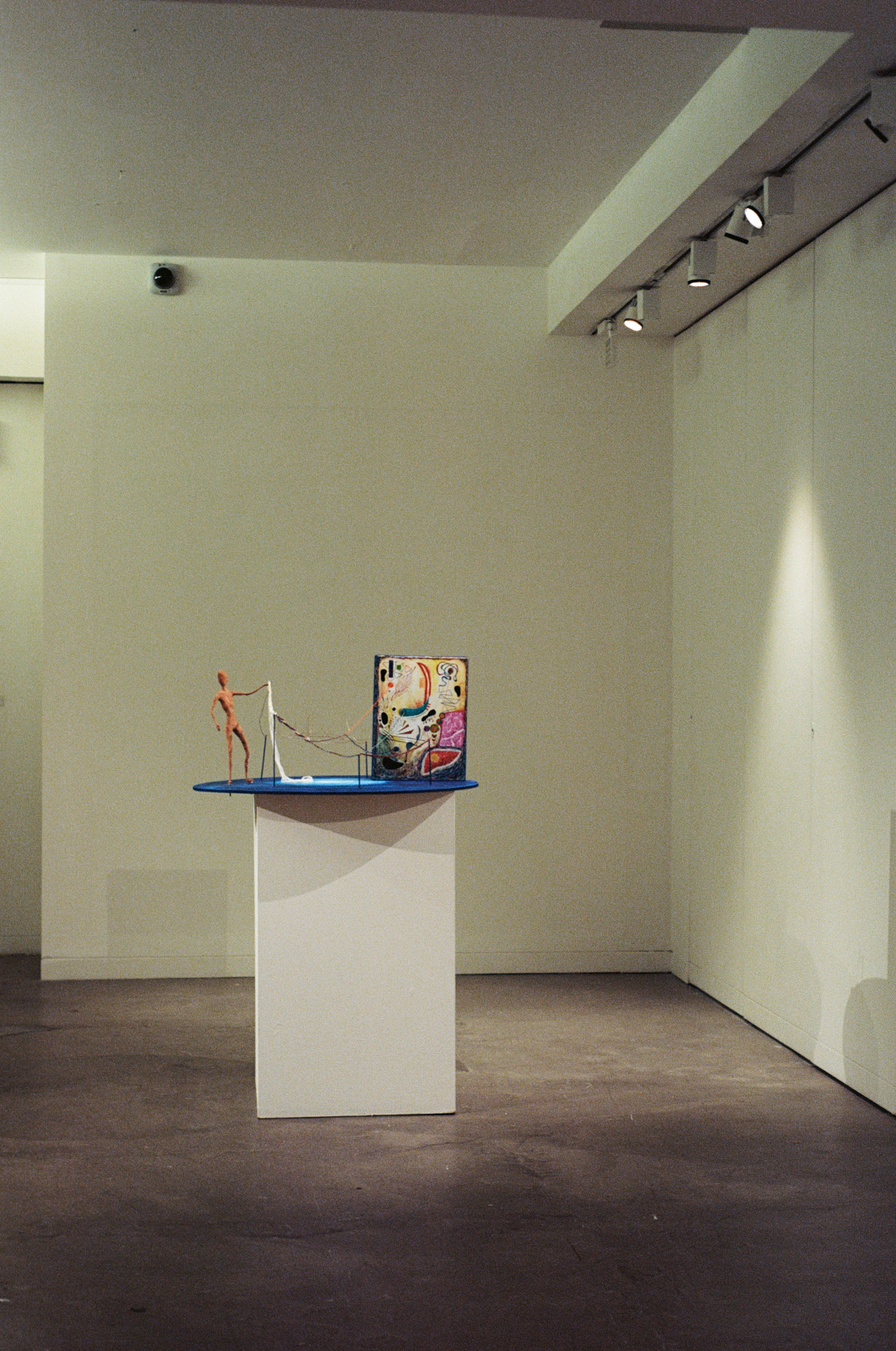

Images taken in Blythe Gallery were shot using Nikon FM2, 50mm f/1.8, Ektar 100 pushed 2 stops.
Abellona U © 2024
 Abellona U